If you’re choosing an AI assistant for 2026, you’re probably not asking “Which chatbot is smarter?” anymore. You’re asking: Which one actually helps me finish real work—faster, cheaper, and with fewer mistakes?
That’s exactly what this ChatGPT GPT-5.2 vs Gemini comparison is for. We’ll break down what matters in practice: capabilities, speed, accuracy, context handling, multimodal quality, developer tooling, pricing, and which AI fits different types of users.
Note on freshness: As of December 12, 2025, OpenAI has launched GPT-5.2 and Google has introduced Gemini 3 in preview, and both are evolving quickly. I’ll reference official pricing/docs and major reporting where possible.
Quick Verdict (So You Don’t Have to Scroll Forever)
- Choose ChatGPT GPT-5.2 if your priority is polished knowledge-work output (docs, spreadsheets, slide creation, multi-step project execution) with strong “assistant” UX inside ChatGPT—especially on paid plans.
- Choose Gemini if you want deep integration with Google’s ecosystem (Gemini app + Google AI plans, and strong developer options through Gemini API/Vertex AI), especially if you’re building on Google’s stack or value Google-native grounding workflows.
What’s New Going Into 2026?
ChatGPT (GPT-5.2): the “work engine” push
OpenAI’s GPT-5.2 release emphasizes stronger coding, long-context improvements, and practical “knowledge-work” tasks like spreadsheets, presentations, and complex multi-step project management.
OpenAI has also signaled new product directions for 2026—like a planned “adult mode” with age-prediction safeguards (important mainly because it hints at how OpenAI is thinking about personalization, policy controls, and gating).
Gemini (Gemini 3 era): reasoning + agentic developer workflows
Google positions Gemini 3 as its “most intelligent” model family, accessible across the Gemini app, AI Studio, and Vertex AI—aiming hard at reasoning and agentic capabilities for developers.
For devs, Google documents Gemini 3 Pro Preview with a 1M token input context (and 64k output context) in preview.
Feature Comparison: ChatGPT GPT-5.2 vs Gemini (2026)
1) Core “Assistant” Experience
ChatGPT GPT-5.2: ChatGPT’s strength is the end-to-end assistant flow: you ask, refine, generate assets (docs, spreadsheets, slides), and often complete a workflow without hopping tools. OpenAI specifically highlights GPT-5.2 Thinking improving harder work tasks with better polish—particularly spreadsheets/financial modeling and slideshow creation.
Gemini: Gemini’s assistant experience shines when you live in Google’s world. Google’s consumer “AI plans” bundle Gemini access with storage and creative tools—positioned as productivity plus media generation (e.g., Veo-based video features mentioned in plan descriptions).
Who wins?
- For “deliverables” (slides/spreadsheets/docs): ChatGPT GPT-5.2 often feels more “done.”
- For Google ecosystem convenience: Gemini.
2) Model Options and Modes
ChatGPT GPT-5.2: OpenAI is rolling out GPT-5.2 in variants such as Instant, Thinking, and Pro, with different speed/quality tradeoffs.
Gemini: Gemini’s lineup is broader across products, but for developers, Gemini 3 Pro Preview is presented as the “complex tasks” model in the new series.
Practical takeaway: If you like choosing “fast vs deep reasoning” at the moment, both ecosystems support that—but they expose it differently (ChatGPT through tiers/modes; Gemini through model selection across API/product surfaces).
3) Context Window and Long-Document Work
Long context is now table stakes, but it still matters if you:
- summarize books/contracts,
- analyze large codebases,
- process long meeting transcripts,
- maintain memory across complex projects.
Gemini 3 Pro Preview lists 1M input context in official developer docs. GPT-5.2 is reported to improve long-context understanding, though OpenAI’s public messaging tends to focus on outcomes (quality in long tasks) more than shouting raw token counts in every announcement.
Who wins?
- If your top concern is maximum documented context on the dev side, Gemini’s published 1M input context is a strong point.
- If your concern is usable long-workflow performance (multi-step tasks that stay coherent), GPT-5.2 is explicitly positioned for that.
4) Multimodal: Images, Audio, Video, and “Real-World” Inputs
Both families are multimodal, but you’ll feel differences based on what you do:
Gemini: Google’s developer docs emphasize Gemini models handling multiple modalities (text, code, PDFs, images, video, audio) and supporting Imagen for image generation.
ChatGPT GPT-5.2: OpenAI highlights visual understanding and tool integration as part of GPT-5.2’s capability jump.
Who wins?
- If you’re building multimodal apps with Google tooling: Gemini has a very direct path via Gemini API/Vertex AI.
- If you want a single “do it for me” assistant that outputs polished work: ChatGPT often feels more streamlined.
5) Accuracy and Hallucinations in 2026
Let’s be blunt: both can still be confidently wrong—especially on:
- niche legal/medical claims,
- breaking news,
- hyper-specific proprietary details,
- ambiguous questions.
What matters is how you reduce errors:
Gemini advantage: grounding workflows (where available) and tight Google integration can help, especially when your task benefits from search-based verification in the same ecosystem. Google also notes billing around “Grounding with Google Search Ads” starting in 2026 for Gemini 3 in its pricing docs.
ChatGPT advantage: strong multi-step reasoning modes and “knowledge-work polish” can reduce sloppy mistakes in structured outputs (tables, models, slides)—but you still need to verify critical facts.
My 2026 rule: If it’s high-stakes, use either model—but force citations, cross-check, and verify. The “best” AI is the one you can operationalize with fewer downstream failures.
Pricing in 2026: What You’ll Actually Pay
ChatGPT pricing (consumer + business)
OpenAI’s official pricing pages show multiple tiers, including business offerings that mention unlimited GPT-5.2 messages with access to GPT-5.2 Thinking and GPT-5.2 Pro (plan specifics vary).
There’s also ChatGPT Go, described by OpenAI as a “low-cost subscription plan” with expanded access to popular features, available in select countries.
Gemini pricing (consumer plans + developer/API pricing)
Google’s “AI Plans” bundle Gemini access with cloud storage and higher model access (plan details depend on region and current offerings).
For developers/enterprises, Gemini 3 pricing is published for preview usage (example: Gemini 3 Pro Preview token pricing via official docs and Vertex AI pricing pages).
What this means in practice:
- If you’re an individual power user, ChatGPT’s tiers can be the simpler “buy one product and work” choice.
- If you’re already paying for Google storage or building on Google Cloud, Gemini’s bundling + Vertex AI pricing can be compelling.
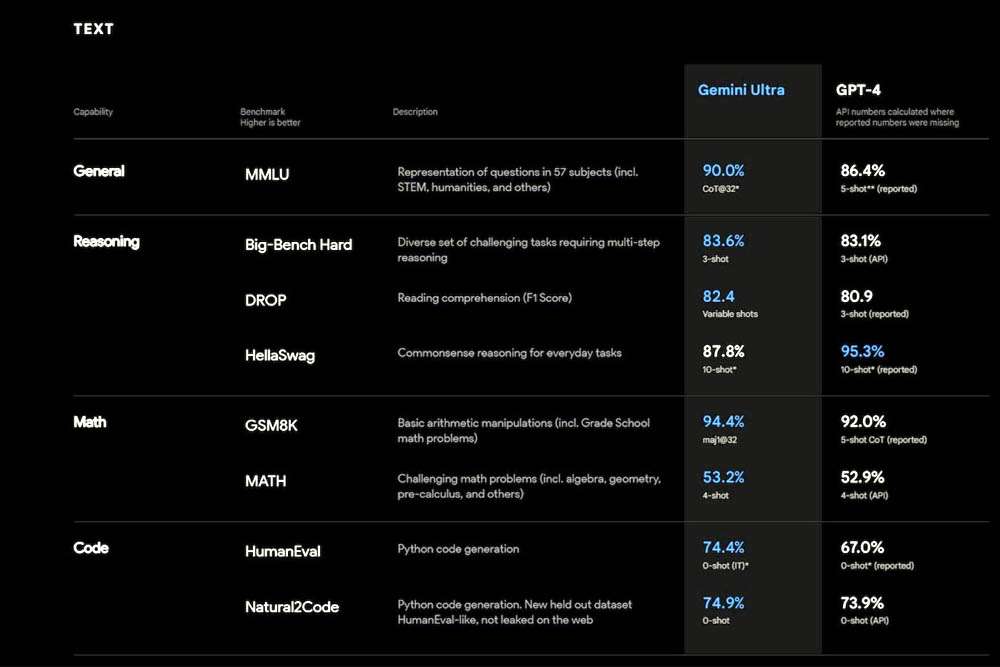
Performance: Which One Feels Faster and Smarter Day-to-Day?
Benchmarks matter less than the “Tuesday afternoon test”:
- Can it follow instructions?
- Does it keep context?
- Does it format outputs cleanly?
- Does it solve the problem without 12 follow-up prompts?
OpenAI’s launch messaging and reporting emphasize GPT-5.2’s improvements in coding, long-context understanding, and multi-step project management, plus improved spreadsheet/presentation outputs in GPT-5.2 Thinking. Google’s Gemini 3 messaging emphasizes reasoning upgrades and agentic workflows for developers.
Translation:
- For business deliverables, GPT-5.2 tends to feel like it “finishes the assignment.”
- For developer-centric agent patterns inside Google’s stack, Gemini is designed to slot into production workflows cleanly.
Best Use Cases: Who Should Choose Which AI in 2026?
Choose ChatGPT GPT-5.2 if you are…
- A marketer writing briefs, landing pages, and content calendars
- An analyst building spreadsheet models and presentations
- A founder/operator running multi-step projects with an AI copilot
- A student/professional who values “polish” and structured deliverables
Choose Gemini if you are…
- Deep in the Google ecosystem (Drive, Workspace-style workflows)
- Building AI features via Gemini API/AI Studio/Vertex AI
- Prioritizing very large published context windows for dev tasks
- Investing in Google’s bundled AI plans with storage and creative tooling
People Also Ask For
Is ChatGPT GPT-5.2 better than Gemini in 2026?
It depends on what “better” means for you. GPT-5.2 is positioned strongly for knowledge-work deliverables (spreadsheets, slides, complex multi-step tasks). Gemini is compelling for Google ecosystem integration and developer workflows via Gemini API/Vertex AI.
Which is more affordable: ChatGPT or Gemini?
Both offer multiple tiers. ChatGPT includes a low-cost Go option in some regions and multiple paid tiers. Google bundles Gemini access in Google AI plans and offers pay-as-you-go pricing for developer usage through Gemini API/Vertex AI.
Which is better for developers: GPT-5.2 or Gemini?
If you’re building on Google Cloud and want to publish Gemini 3 Pro Preview pricing and model docs, Gemini can be very straightforward. If you prefer ChatGPT’s productized assistant workflows for coding + deliverables, GPT-5.2 is strong—especially in “Thinking” style modes.
Final Thoughts
In the ChatGPT GPT-5.2 vs Gemini debate, the winner is rarely universal. The real difference is product philosophy:
- ChatGPT GPT-5.2 is optimized for turning prompts into finished work—clean structure, fewer loose ends, and strong multi-step execution.
- Gemini is optimized for being a Google-native intelligence layer—powerful for those who live in Google’s ecosystem and for developers shipping AI features via Gemini API/Vertex AI.
If you want my practical recommendation for 2026: Use ChatGPT GPT-5.2 as your default “get things done” assistant—and keep Gemini as your second brain when your work is already anchored in Google tools or you’re building on Google Cloud.