
Here is what happens in most Google Ads accounts. Traffic goes up. Sessions climb. The dashboard looks active. And the phone does not ring. The form stays empty. Budget runs out and the business has the same number of leads it had before spending anything.
Traffic is not the goal. Leads are the goal. Calls. Form fills. Booked consultations. Quote requests. Purchases. Those are the goals. Traffic is just the mechanism to get there and a lot of campaigns forget that entirely.
At Ecommerce Planners, we are the best at running Google Ads for website traffic campaigns that actually produce leads — not just sessions. A campaign bringing 1,000 visitors with zero inquiries failed. A campaign bringing 300 visitors and 40 qualified leads succeeded. This guide covers what separates those two outcomes — campaign types, keyword intent, landing pages, conversion tracking, and the specific mistakes that kill conversions after the click.
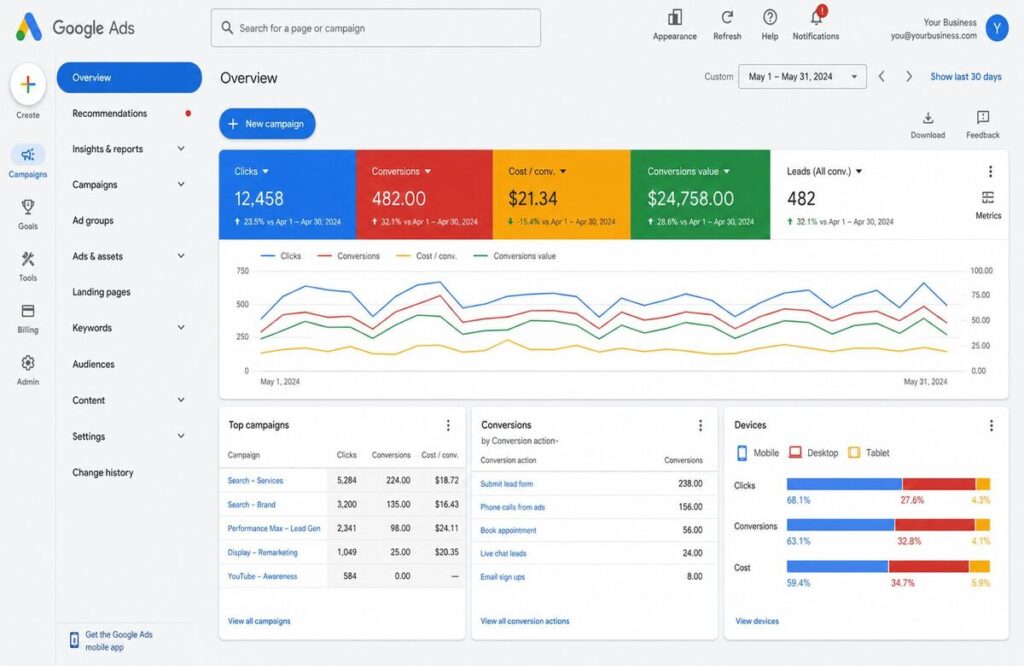
Why Website Traffic Alone Is Not Enough
More visitors do not automatically mean more business. Sounds obvious. Not how most campaigns are built.
Traffic vs Quality Traffic
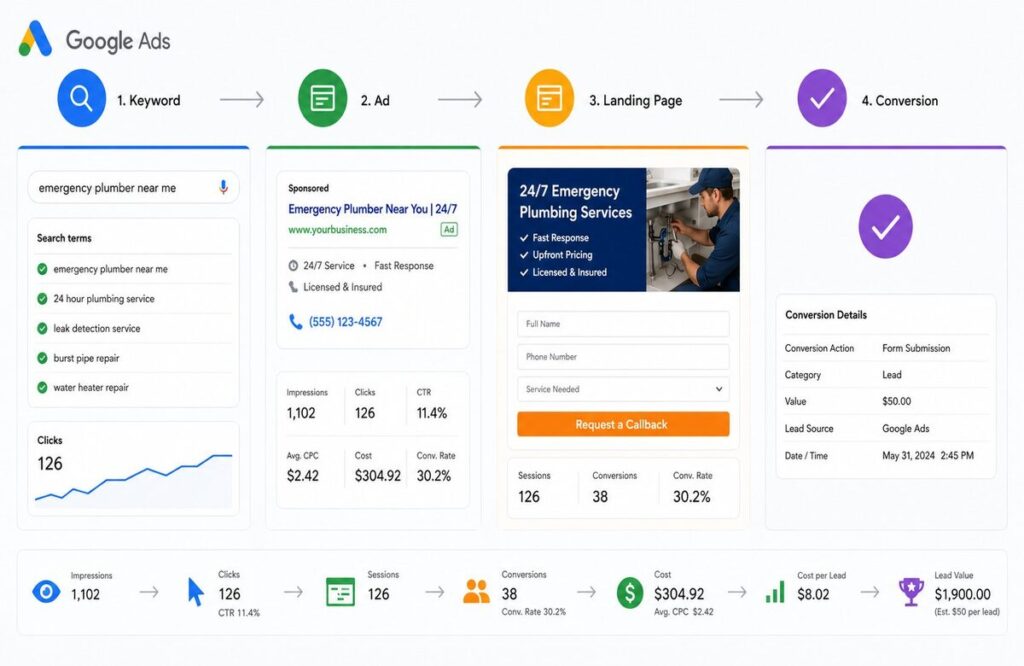
Quality traffic means visitors who actually match your ideal customer and are searching for what you offer. A plumbing company getting 500 clicks from people searching “how plumbing works” is not getting quality traffic. The same company getting 80 clicks from people searching “emergency plumber near me” absolutely is. The first group never intended to hire anyone. The second group is calling someone today.
Volume looks better in the first scenario. Business results are reversed.
Why Clicks Do Not Always Become Leads
Six things kill conversions after the click. Wrong keywords are bringing people with no buying intent. Weak landing pages lose visitors in the first few seconds. Poor or missing CTAs leave people with no obvious next step. Slow load times on mobile are causing exits before the page even appears. Unclear offers leave visitors unsure what they are actually getting. And no conversion tracking means nobody can see which clicks became customers and which just spent the budget.
| Focus | Traffic-Only Campaign | Lead-Focused Campaign |
| Main Goal | More visitors | More inquiries |
| Optimization | Clicks | Conversions |
| Best Page | Blog or general page | Landing page or service page |
| Success Metric | Clicks and sessions | Calls, forms, bookings, sales |
| Risk | Wasted traffic | Better business results |
Want traffic that brings real leads? Our Google Ads team builds campaigns focused on quality visitors and real conversions.
How Google Ads Helps Bring Website Traffic and Leads
The fundamental difference between Google Ads for website traffic and social advertising is intent. The person typing into Google already wants something. They are not passively scrolling. They are actively searching for an answer, a service, or a solution. Your ad shows up at the exact moment that intent exists.
It Targets People With Search Intent
Someone searching “Google Ads agency for small business” is not browsing. They have a problem and are actively looking for whom to hire. That is incomparably different from serving an ad to someone based on demographic assumptions about who might eventually need something.
It Sends Visitors to the Right Page
This is where most campaigns quietly fail. Someone searches “Google Ads for eCommerce,” and the ad sends them to the homepage. The homepage talks about everything. The visitor wanted something specific. They leave. Send every ad to the page that directly addresses what the person searched for. That match between search query, ad message, and landing page content is one of the highest-leverage improvements in any Google Ads for website traffic campaign.
It Builds Retargeting Audiences
Not every visitor converts on the first visit. Normal. Google Ads lets you tag those visitors and show them ads later with a stronger offer — a free audit, a consultation, a case study from their specific industry. Retargeting brings warm traffic back with context already established.
It Gives Data for Better Decisions
Google Ads shows which keywords produced calls, which ads generated form fills, and which landing pages converted. That data is actionable in ways most other channels cannot match.
Best Google Ads Campaign Types for Website Traffic and Leads
| Campaign Type | Best For | Lead Quality |
| Search Ads | High-intent searches | High |
| Performance Max | Wider Google reach | Medium to High |
| Display Ads | Retargeting | Medium |
| Demand Gen Ads | Visual awareness | Medium |
| Shopping Ads | eCommerce products | High |
Search Ads
Search Ads are the starting point for most businesses running Google Ads for website traffic. Text ads triggered by specific searches. Intent is explicit. Highest lead quality for most service businesses.
Performance Max
Performance Max runs across every Google surface using automation. Works well when conversion tracking is strong, and the account has historical data. With a small budget and weak tracking it burns spend in the wrong places before correcting itself.
Display Ads
Display Ads are best for retargeting — showing ads to people who have already visited the site. For cold traffic from people who have never heard of the business they typically underperform Search significantly.
Demand Gen
Demand Gen runs across YouTube, Gmail, and Discover. Best for awareness and warming audiences not yet actively searching.
Shopping Ads
Shopping Ads display product images, prices, and store names in search results. Designed specifically for e-commerce. Consistently beats text ads on product-specific searches
Not sure which campaign type fits your business? Contact us and we will help you choose the right one for traffic and leads.
How to Set Up Google Ads to Get Leads From Website Traffic
Setup determines outcome. A campaign built around lead generation from day one performs differently from one built for traffic volume and later adjusted to care about conversions.
Choose a Lead-Focused Goal
If the goal is leads, the campaign must track conversion events from the start. Form submissions. Phone calls. Booking clicks. Quote requests. Purchases. Google’s algorithms optimize toward whatever they are told to optimize toward. Tell them to find clicks and they find cheap clicks. Tell them to find conversions and the whole campaign behaves differently.
Target Keywords With Buying Intent
These signal someone ready to engage — not someone researching a topic: Google Ads agency, Google Ads management, ppc management services, hire a Google Ads expert, Google Ads consultant, Google Ads for website traffic, Google Ads for small business
Use the Right Landing Page
Dedicated landing pages convert better than homepages. If the ad covers Google Ads for website traffic, the landing page should address traffic strategy, lead generation, campaign setup, tracking, and results — not a generic overview of every service offered. The match between the ad message and the landing page content directly affects both Quality Score and conversion rate.
Write Ads That Pre-Qualify Visitors
“Get Google Ads traffic that turns into calls, forms, and qualified leads” tells the right person exactly what they are getting. Someone looking for free information self-selects out. Someone looking for a growth partner clicks because the message speaks directly to their problem.
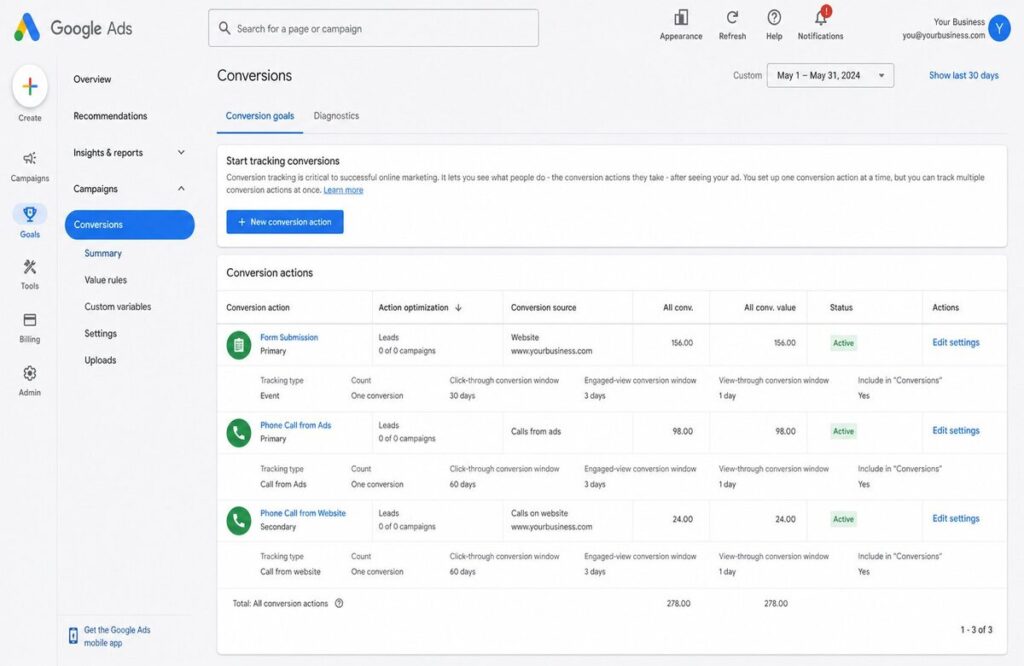
Set Up Conversion Tracking First
Spending without tracking is operating blind. No way to know which keywords produce calls, which ads drive form fills, which pages convert. Conversion tracking is not optional — it is the foundation every optimization decision builds on.
What Kind of Website Traffic Converts Into Leads?
People Searching for a Solution
These users know they have a problem and are looking for help. Searching “how to get leads from Google Ads” means someone already has a gap they want to close. Research mode but moving toward action.
People Comparing Service Providers
“Best Google Ads agency for small business” is not casual. Someone typing that is evaluating options and will likely contact two or three agencies this week. Being visible at that moment with a credible page is where lead generation actually happens.
People Returning Through Retargeting
A visitor who spent time on a service page and left without converting already knows the brand. A retargeting ad with a specific offer brings them back when they may be ready to act.
People Landing on a Strong Offer
Vague offers produce nothing. Specific offers produce inquiries.
- “Free Google Ads Audit”
- “Free Strategy Call”
- “Custom PPC Growth Plan”
Each gives a visitor a concrete reason to fill out a form today rather than bookmarking the page and never returning.
Landing Page Elements That Turn Google Ads Traffic Into Leads
The ad gets the click. The landing page converts it. Most budget waste in Google Ads happens not in the ad but in what happens after the click.
Clear Headline matching the ad and keyword. Someone clicking a Google Ad for website traffic ad should land on a page that immediately reflects that — not a generic brand headline.
Strong CTA using direct action language. Get a Free Quote. Book a Strategy Call. Request a PPC Audit. Speak With a Google Ads Expert. Specific tells the visitor what happens next.
Trust Signals answer why they should trust this company with their budget. Reviews, testimonials, client logos, case studies, certifications, and years of experience.
Simple Lead Form asking only for what is needed. Name, email, phone, and one or two project-specific questions. The rest gets covered on the call.
Fast Mobile Experience. Over 60% of Google searches happen on mobile. A five-second load time on a phone loses most potential leads before they read anything. Page speed is a direct conversion factor.
Clear Offer creating a reason to act now. A free audit, a strategy call, a custom report — something specific the visitor gets for taking the next step today.
Already getting traffic but not enough leads? Your landing page may be the problem. Let us review your Google Ads funnel and show you exactly where leads are dropping.
Google Ads Keywords That Bring Better Website Traffic
Commercial Keywords attracted to close to a buying decision: Google Ads agency, Google Ads management firm, ppc agency, Google Ads specialist, Google Ads consultant, Google Ads provider
Problem-Based Keywords attracted to actual searchers looking for a solution: how to increase website traffic, Google Ads clicks but no leads, how to generate leads from Google Ads, why aren’t my Google Ads working
Keywords for local services for agencies and service providers: Google Ads agency near me, google ads services [city], ppc company [city], google ads consultant [city]
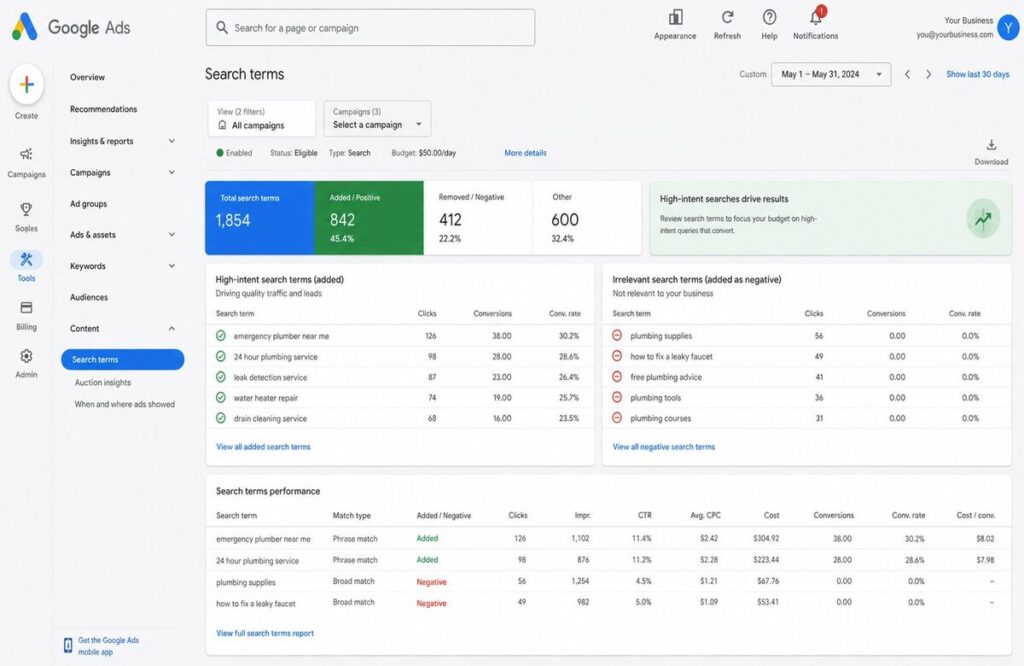
Negative Keywords keeping unwanted traffic out from the start: free, jobs, salary, course, tutorial, pdf, login, meaning, definition
How to Reduce Wasted Clicks and Improve Lead Quality
Match Keywords With Landing Pages. “Google Ads for plumbers” traffic should not go to a general PPC page. It should go to a page speaking directly to plumbers — their challenges, their typical campaign structure, their expected results.
Review Search Terms Weekly. Search terms show what people actually typed before clicking. They reveal irrelevant matches to block and new high-intent terms to add. This weekly habit produces more budget optimization than almost anything else.
Avoid Sending Every Click to the Homepage. Too broad. Too many distractions. A specific landing page for a specific offer converts paid traffic consistently better.
Use Lead-Based Conversion Tracking. Track phone calls, form fills, booking confirmations, and chat starts. Not pageviews. No time on site. Actions indicating genuine intent.
Improve the Offer Before Increasing Budget. More budget amplifies what is already happening. A weak offer with double the budget produces twice the wasted spend. Fix the Offer first. Then scale.
Important Metrics to Track in Google Ads
| Metric | Why It Matters |
| Clicks | Shows traffic volume |
| CTR | Shows ad relevance to the search |
| CPC | Shows cost per visitor |
| Search Terms | Shows what people actually searched |
| Conversion Rate | Shows how many visitors become leads |
| Cost Per Lead | Shows lead generation efficiency |
| Landing Page Conversion Rate | Shows page quality |
| Phone Calls | Shows direct lead actions |
| Form Submissions | Shows inquiry volume |
Clicks are the starting point. These numbers really don’t matter: conversion rate, cost per lead and the quality of those leads. The 5% conversion rate, $40 cost per lead campaign is winning, no matter how many clicks. The 0.2% conversion rate campaign with thousands of clicks is losing, no matter what the traffic report says.
Common Reasons Google Ads Traffic Does Not Convert
Wrong Keyword Intent. “What is Google Ads?” brings researchers. “Google Ads agency near me” brings buyers. The intent gap between those two searches determines everything about how that traffic behaves after the click.
Weak Landing Page. Too many options, no clear hierarchy, no obvious next step. People do not puzzle through unclear pages. They leave.
No Clear Offer. Without a specific reason to act now, most visitors do nothing. An offer gives them a concrete next step with a real benefit attached.
Poor Ad Message. “We offer Google Ads services,” tells nobody anything worth clicking for. “Get Google Ads traffic that converts into qualified leads” speaks to a specific problem a specific person is trying to solve.
No Conversion Tracking. Without it, optimization is guesswork. Budget drifts toward campaigns that look active on surface metrics while campaigns actually producing leads go unrecognized.
Too Much Focus on Clicks. Clicks are a means to an end. The end leads to sales, calls, and revenue.
Google Ads for Website Traffic vs Google Ads for Leads
Traffic campaigns have real uses. A new blog is building readership. A brand entering a new market. A business is testing landing pages. In those situations traffic volume has genuine value.
For most service businesses, agencies, and e-commerce stores, growth comes from conversions, not visitor counts. A blog needs traffic. A service business needs inquiries. An e-commerce store needs purchases. The campaign goal should match the actual business goal. Running a traffic campaign when the goal is leads is one of the most preventable reasons Google Ads for website traffic campaigns disappoint.
Best Practices to Increase Website Traffic With Google Ads
Build campaigns around clear search intent. Every campaign starts with what the user wants. When keyword, ad, and landing page match actual intent, traffic quality improves and conversion rates follow.
Keep ad groups focused. One service, one Offer, one keyword theme per ad group. Tight ad groups produce more relevant ads, better Quality Scores, lower costs, and higher conversion rates.
Use long-tail keywords for better lead quality. “Google Ads agency for small business” brings someone closer to taking action than just “Google Ads.” More specific, more intent, lower cost per click, higher conversion rate.
Write ads that match the landing page. If the ad talks about lead generation, the page should not only discuss website traffic. Message match between ad and page directly affects Quality Score and visitor trust.
Improve the landing page before scaling the budget. Fix the page, confirm it converts, then scale toward it. The other order wastes money.
Track conversions not just clicks. Clicks show traffic arrived. Conversions show the traffic did something valuable.
When Should You Use Google Ads for Website Traffic?
Use Google Ads for website traffic when the website is new and rankings have not been built yet, when a new offer needs immediate visibility, when testing a landing page before committing to SEO investment, or when targeting a specific market or city right now. But even then build the campaign to measure what traffic does after it arrives. Traffic that cannot be connected to a business outcome cannot be improved.
Final Strategy: Turn Google Ads Traffic Into Real Leads
The best Google Ads for website traffic campaigns are not designed to produce impressive dashboard numbers. They put the right message in front of the right person at the right moment, send them to a page built specifically for what they searched, and give them a clear compelling reason to take the next step.
Keyword intent matched to ad copy. Ad copy matched to landing page. Landing page built around one Offer and every reason a visitor should trust making contact. Conversion tracking on every action that matters. Weekly optimization using real search data.
Traffic is visitors. Leads are what grow the business. Build the campaign around the second goal from the start.
Need Google Ads traffic that turns into real leads? Our team builds campaigns focused on quality clicks, better landing pages, and measurable business results.
Contact Ecommerce Planners today to get started.
Our in five small business advertisers say digital ads help them compete with larger businesses. Additionally, 82% of small and medium-sized business advertisers agree that digital ads allow them to reach their target customers more efficiently than traditional offline ads like TV, radio, or newspaper.
Source: Google
FAQs
Can Google Ads bring website traffic and leads?
Yes. Google Ads for website traffic produces results when campaigns target the right keywords, use dedicated landing pages, and track every conversion action. Build the campaign around lead goals from the start — not retrofitted later.
Why am I getting traffic from Google Ads but no leads?
Usually wrong keyword intent, traffic sent to the homepage, generic ad copy, no clear offer on the landing page, missing conversion tracking, or slow mobile load times. Any one of these alone can bring the conversion rate to near zero.
What is better, traffic or leads in Google Ads?
Leads for any business where the goal is growth. Traffic has value for awareness and testing. For service businesses, agencies, and e-commerce stores the campaign should be structured around revenue-generating actions — not visitor counts.
Which Google Ads campaign is best for leads?
Search Ads for most businesses because they target people actively searching for a specific service. Local Services Ads are also strong for eligible service categories since they charge per lead rather than per click.
Should I send Google Ads traffic to my homepage?
Almost never for paid campaigns. Homepages are too broad. A dedicated landing page or service page matching the specific ad and keyword converts significantly better because it gives the visitor exactly what they searched for.
How do I improve lead quality from Google Ads?
High-intent commercial keywords, a comprehensive negative keyword list before launch, keyword groups matched to dedicated landing pages, ad copy that pre-qualifies the right visitors, and conversion tracking on every lead action. Review search terms weekly and block irrelevant matches as negatives.

