
Honestly, launching a new website and expecting Google traffic right away is one of the most common mistakes new site owners make. It does not work that way. But here is what most people do not tell you — SEO for new website success is not about waiting. It is about doing the right things in the right order from day one. At Ecommerce Planners, we provide best SEO Services that get real traction fast. This guide covers every step — from technical setup to content to link building — so your new site has the best possible shot at ranking on Google quickly.
The Truth About SEO for New Websites Nobody Tells You
Google Does Not Trust New Websites Immediately
This is the part most SEO blogs skip. Google has a trust problem with new websites. Not because your site is bad. Because it has no history. No backlinks. No user engagement data. or No track record.
Think of it like being new to a job. You might be the most talented person in the room. But your manager still needs time to see that. Google works the same way.
SEO for new website growth requires building that trust systematically. Every backlink you earn, every page you optimize, every piece of content you publish — it all adds to your credibility in Google’s eyes over time.
The Sandbox Effect — Is It Real
The Google Sandbox is a widely discussed concept. The idea is that new websites are held back from ranking for competitive keywords for a period of time — sometimes three to six months — regardless of how well optimized they are.
Google has never officially confirmed this. But SEO professionals have observed the pattern consistently for years. Ahrefs published research showing that most pages that rank in the top ten are at least two to three years old for competitive terms.
The practical takeaway? Target low competition keywords early. Build authority steadily. Do not expect overnight results for hard keywords. But do not stop either — because the work you do in month one compounds into month six results.
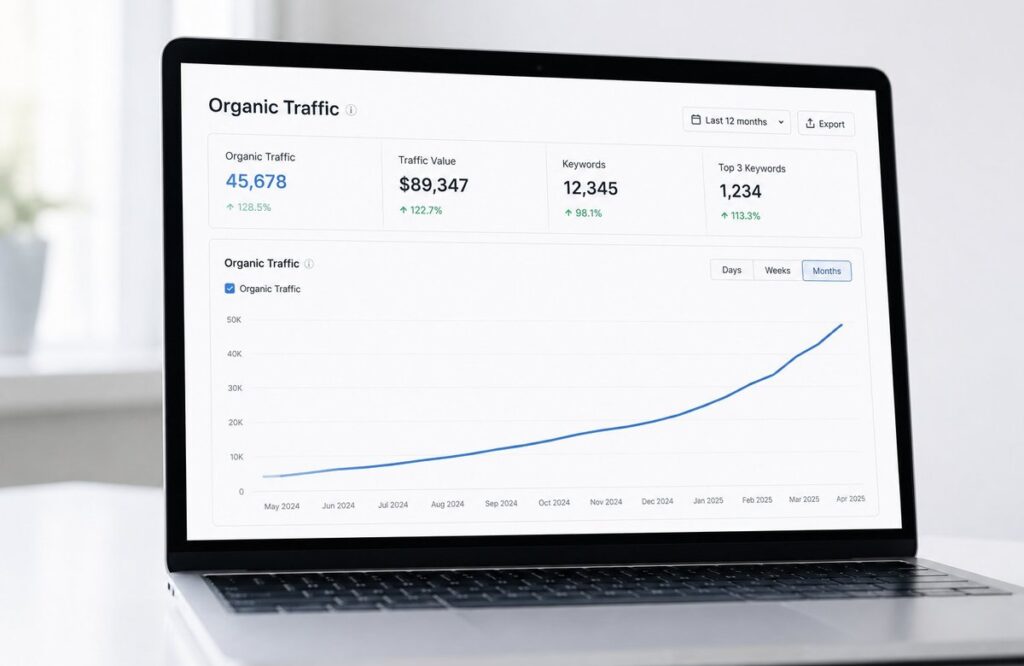
Before You Write a Single Word — Get the Foundation Right
Pick the Right Domain and Hosting
Your domain name matters more than people think for SEO for new website success. Keep it short. Keep it brandable. Avoid hyphens and numbers. A clean domain like yourbrand.com is always better than your-brand-services-2024.com.
Hosting matters too. Page speed is a direct Google ranking factor since the Core Web Vitals update. A cheap shared hosting plan that loads your site in four seconds is actively hurting your rankings before you write a single word.
Invest in quality hosting from day one. WP Engine, Kinsta, and SiteGround consistently deliver the speeds Google rewards. This is not optional — it is foundational.
Install These Before You Launch
Before your site goes live, three things must be in place. Miss any of these and you are starting with one hand tied behind your back.
Google Search Console tells you how Google sees your site. What pages are indexed? What keywords you are appearing for? or What errors exist? It is free and essential for tracking SEO for new website progress from the very beginning.
Google Analytics 4 follows what people do on your site. How long they spend on each page, how often they leave after seeing just one, and the steps they take to become customers; all of this information shows you what’s succeeding and what isn’t, helping you get better as you go.
If you use WordPress, an SEO plugin (something like Yoast or Rank Math) lets you manage title tags, meta descriptions, schema markup, and XML sitemaps – and you don’t have to edit the website’s actual code to do it.
Keyword Research That Actually Works for New Sites
Go After Low Competition Keywords First
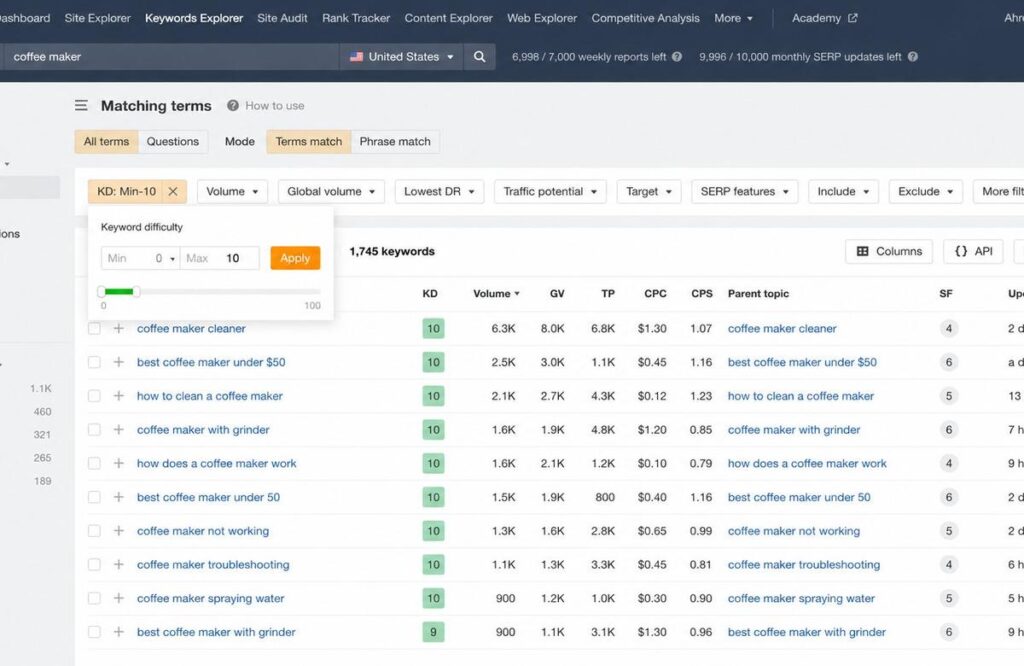
This is the single most important strategic decision in SEO for new website campaigns. A brand new site cannot compete for “SEO services” or “digital marketing agency” out of the gate. Those keywords have years of authority behind them from established competitors.
What you can win is the long tail. Specific, lower volume, lower competition searches where your content can genuinely be the best answer available.
For example, instead of targeting “landscaping services” — a new landscaping site might target “how much does lawn aeration cost in Austin” or “best time to plant grass seed in Texas.” These are real searches with real intent and far less competition.
Win the small keywords first. Build authority. Then go after the bigger ones.
How to Find Keywords Your Competitors Are Ignoring
Use tools like Ahrefs, Semrush, or even free tools like Ubersuggest. Search your main topic and filter by keyword difficulty below 20. Those are your early targets.
Also look at the People Also Ask boxes in Google search results. These show you exactly what questions real people are asking about your topic. Answer those questions better than anyone else and you have a real shot at a featured snippet — even as a new site.
Google ranking for new websites comes fastest when you identify the gaps your competitors have left open and fill them with genuinely helpful content.
On-Page SEO for New Websites — Page by Page
Homepage Optimization
Your homepage is not just a welcome mat. It is one of the most powerful pages on your site for SEO for new website purposes. It sets topical relevance. This passes authority to the inner pages. Google quickly gets the gist of your website with this.
For your homepage’s title (the thing in the browser tab) you should have your main brand term and, if you’re a business that deals with people in a certain area, your location. The main heading on the page (the H1) should be very obvious and to the point. And in the first 100 words or so of your opening paragraph, say what you actually do, who you do it for, and where you do it.
Linking from your homepage to the important pages describing what you offer and your information (your key services and content) helps Google both go through your site and understand how it’s organised, right from Google’s initial look.
Service and Product Pages
Every service or product you offer needs its own dedicated page. Not a section on a page. Its own URL, its own title tag, its own optimized content.
A new website SEO strategy that consolidates everything onto one page is leaving an enormous ranking opportunity untouched. Each individual page can rank for its own keyword. Each one becomes a separate entry point from Google.
Keep the content on these pages genuinely useful, and make sure that what the service includes and how it works. Who it is for. Pricing ranges where possible. FAQs specific to that service. Real information that answers what someone searching for that term actually wants to know.
Blog Content Strategy
A blog is not optional for SEO for new website growth. It is one of the primary mechanisms through which new sites build topical authority and earn rankings.
Here is a practical content approach that works for new sites specifically:
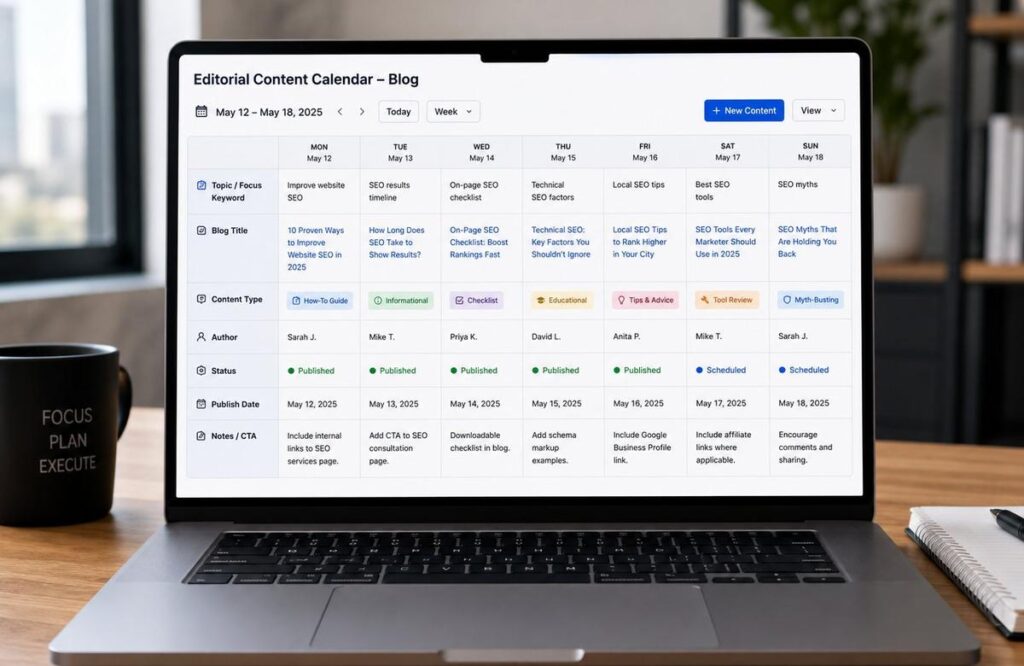
- write ten fairly simple articles about things people are looking up in your field (but that aren’t already covered by tons of other sites). Then, publish one or two of these each week, steadily, rather than putting all ten up and then doing nothing further. Within each article, use links to other content on your own website to tie things together. Refresh older articles every three or four months to make sure the information is current. And finally, pay attention in Google’s Search Console to which articles are being seen, and create more content on those subjects.
Consistency beats volume. A site publishing two well-researched posts every week will
Technical SEO Checklist for New Websites
Technical issues on a new site can quietly block all your other efforts. Here is what needs to be right before you focus on anything else.
Site speed — Run your site through Google PageSpeed Insights. Aim for a score above 80 on mobile. Compress images. Use a caching plugin. Minimize render-blocking scripts.
Mobile optimization — Over sixty percent of all Google searches are done on them. Because of this, your website has to be fast at loading, look good, and be easy to use on a phone. In fact, Google primarily uses the mobile version of your site when it’s looking at it (this is called mobile-first indexing).
SSL certificate — HTTPS is a confirmed ranking signal. Every new site should have an SSL certificate installed from day one. Most hosting providers include this for free.
XML sitemap —Tell Google about all the pages on your website using an XML sitemap through Google Search Console; this way Google can find and visit them without delay.
Canonical tags — To avoid problems with having the same content appear in multiple places, implement canonical tags. Each page should have one, specifically indicating the single proper web address for that page.
Schema markup — If you add structured data (schema markup) to your pages, Google will get a much better sense of what your content is about and you might get special, detailed listings in search results. For local businesses, the LocalBusiness schema is the most important to use.
Our technical SEO services cover every one of these elements as part of our new site onboarding process.
Link Building for Brand New Sites
Why Backlinks Still Matter in 2026
Google has changed how it figures out search results literally hundreds of times over the years. Yet, backlinks (other websites linking to yours) are always among the three most important things in getting a high ranking. If your brand new site has no links pointing to it, you’re going to have a really hard time beating competitors who have many, perhaps lots of them, linking to their pages.
How to rank a new website on Google faster comes down partly to how quickly you can build legitimate backlinks from relevant sources.
Where New Sites Can Actually Get Links
One of the most consistently successful ways to get links is to write as a guest on blogs in your field. Contact publications that are about what you do, and provide content that’s truly helpful to their audience, getting a link back to your own site as a result.
Local citations matter enormously for local businesses. Get listed on Google Business Profile, Yelp, Bing Places, Apple Maps, and industry-specific directories. These links are easy to get and they send strong local relevance signals to Google.
Broken link building is an underused tactic for new sites. Find pages in your niche that link to resources that no longer exist. Reach out to the site owner with your content as a replacement. It works more often than people expect.
Our link-building services are built around white hat acquisition strategies that build authority without risking penalties. No shortcuts. No link farms. Just real placements on real sites.

How Ecommerce Planners Help New Websites Rank Faster
New websites need a different approach than established ones. The strategy, the timeline, the priorities — all of it shifts when you are starting from zero.
Since 2019 we have worked with businesses launching brand new websites across industries — from fashion brands like Aldo and Mango to service businesses and e-commerce stores. We know what the early months of SEO for new website growth look like and we know how to accelerate them.
Our SEO packages for new websites include full technical setup, keyword research and mapping, on-page optimization across every page, content strategy development, and a link building plan tailored to your niche and budget.
We also set up and configure Google Search Console and Google Analytics from day one so you have clean data tracking growth from the very beginning. Our content marketing services ensure your blog strategy is built around keywords that can actually rank early — not just the ones that sound good.
Transparent monthly reporting shows you exactly where your rankings stand, what traffic is coming in, and what the next priority is. You are never left wondering what is happening or why.
Our digital marketing services cover everything beyond SEO too — Google Ads for faster initial traffic while organic builds, social media to amplify content reach, and conversion optimization to make sure the traffic you earn actually turns into leads and sales.
Everything under one roof. One team. One clear strategy built around your specific goals.
Reach out today for a free website audit and find out exactly where your new site stands and what it needs to start ranking.
The top organic result on Google captures a 39.8% click-through rate. Position two drops to 18.7% and position three falls to 10.2%. Together the top three results claim over two-thirds of all clicks — and 75% of Google users never scroll past page one at all.
Source: SEO Sherpa
FAQs
Q1. How long until a brand new website shows up in Google searches?
Generally, with regular SEO work, you’ll probably start to get a decent amount of traffic from those searches after three to six months. But, for keywords people are already heavily competing for in a busy market, it could be nine to twelve months. Really, how much competition there is for what you do and how often you add new content are the biggest things that affect the timing.
Q2. What’s the very first thing to do for SEO on a new website?
It’s getting the technical side of things in order, not writing content. So, before you start on articles, get Google Search Console installed, make sure your site is quick to load, ensure SSL is working (that’s the security thing with ‘https’), and submit your XML sitemap.
Q3. Can a new website rank on Google fast?
Yes — for the right keywords. Low competition long-tail keywords can rank within weeks for a new site with well-optimized content. Highly competitive short-tail keywords take much longer.
Q4. Do I need a blog to improve your SEO with a new website ?
Yes, a blog is a very quick way to become known as an expert in your field and start getting a good position in search results. It’s with a blog that you can focus on keywords about information, respond to the questions your potential customers are typing into Google, and create links within your website that make the whole thing stronger.

