

Google Ads for therapists help therapy practices reach people at the exact moment they search for support. Mental health care has changed. Patients no longer rely only on referrals. They search online. They compare options quickly. They contact the therapist who feels right and appears first.
Therapy practices face unique challenges. Trust matters. Sensitivity matters. Compliance matters. Generic advertising fails here. Google Ads for therapists work because they target intent, location, and need with precision.
This guide explains how therapists can use Google Ads safely, ethically, and profitably in 2026. It also shows how a professional setup prevents wasted spend and compliance issues.
Google Ads for Therapists – Setting Up a New Campaign
1. Before Getting Started
Therapy ads should never feel aggressive. They should feel supportive and safe. A strong offer builds confidence.
Examples include:
- Free initial consultation
- Same-week appointments
- Online therapy availability
- Insurance accepted
Ads for therapy work best when the message focuses on help, not pressure.
Budget to Test Ads for 2–3 Months
Google Ads for therapists need testing time. Results do not stabilize in weeks. A 60 to 90-day test period allows enough data.
Testing budgets help:
- Identify winning keywords
- Improve ad messaging
- Control cost per lead
Digital marketing for therapists works best when decisions follow data.
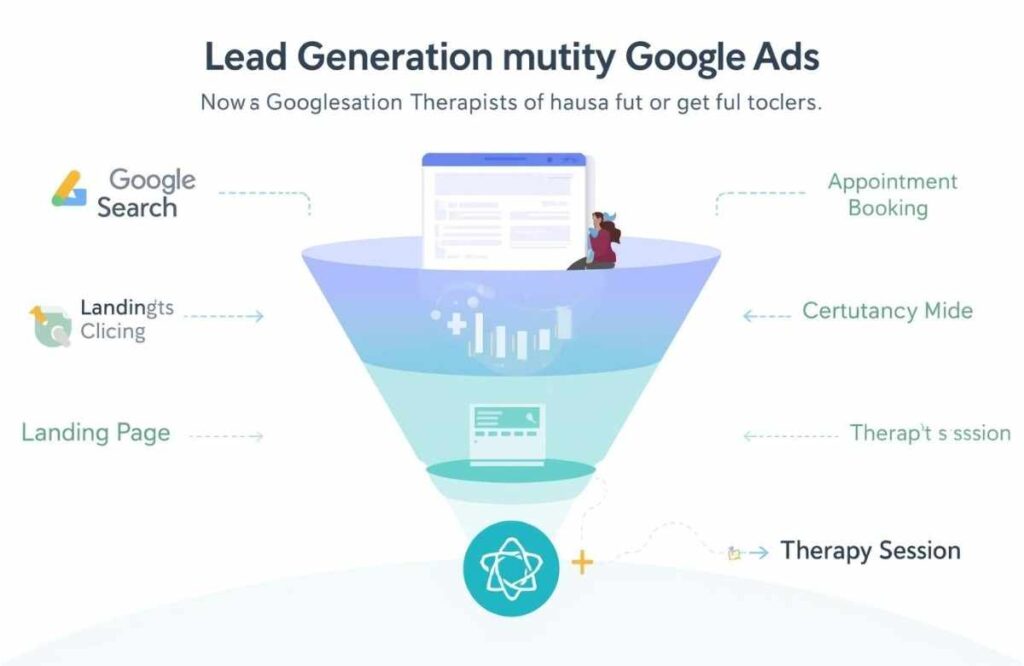
2. Preparing Your Website or a Landing Page for Ads
Sending ad traffic to an unprepared website leads to poor conversions. Therapy patients need reassurance.
Website Checklist for Google Ads
A therapy website should include:
- Clear services and specialties
- Therapist credentials and licensing
- Location and contact details
- Privacy and confidentiality reassurance
- Simple contact or booking form
Google Ads for medical practice campaigns convert better when landing pages are focused and calm.
3. Setting Up Your Google Ads Campaign
When setting up an advertising campaign, begin by choosing the right campaign objective and type. Search campaigns work best because they target people actively looking for therapy services, while display and video ads should be considered secondary options. Use your official practice name and website to maintain accuracy and trust, as mismatched information can reduce credibility in healthcare advertising. Adding optional business details such as your location, phone number, and call extensions can significantly improve ad performance by making it easier for potential clients to contact you directly.
Next, focus on setting clear conversion goals to measure success effectively. Track phone calls, form submissions, and booked consultations, as accurate conversion tracking is essential for ongoing optimization. Search campaigns should be prioritized since they capture high-intent users and consistently outperform awareness-based campaigns for therapy practices. When selecting a bid strategy, start with manual bidding or conversion-focused options, and avoid full automation until reliable data has been collected.
4. Selecting Keywords for Therapy Ads
About Keyword Match Types
Exact and phrase match keywords control intent. Broad matches often attract irrelevant traffic.
Choosing Keywords
High-intent keywords include:
- Therapist near me
- Anxiety therapist
- Online therapy sessions
- Licensed therapist in [city]
SEO marketing for therapists complements paid ads, but paid search delivers faster results.
5. Creating Effective Google Ads for Therapists
Well-structured ads build trust. Clear structure reduces wasted spend. Google Ads for therapists work best when every element supports patient confidence and clarity.
About Ad Assets
Ad assets make your ads more visible and credible. They provide extra information without adding pressure. Call extensions allow patients to reach you instantly. Site links guide users to specific services like anxiety therapy or online sessions. Structured snippets highlight specialties and credentials. When used correctly, ad assets improve click-through rates and patient trust.
About Ad Groups
Ad groups control relevance. Each service needs its own ad group. Anxiety therapy should not share ads with couples therapy. Trauma care requires different language than stress counseling. Separate ad groups improve message accuracy. Higher relevance lowers cost per click and increases quality leads.
Setting a Daily Budget
Start with a controlled daily budget. Avoid overspending early. Testing identifies what works before scaling. Increase budgets only on keywords that produce qualified inquiries. This approach limits risk and improves return over time.
6. Ongoing Optimization for Google Ads for Therapists
Google Ads for therapists require ongoing care. Campaigns do not improve on their own. Patient behavior changes. Search terms change. Costs change. Regular optimization protects your budget and improves lead quality.
Dashboard Overview
The dashboard shows how patients interact with your ads. Review it every week. Focus on clicks, calls, and cost per lead. Rising clicks with low calls signal a messaging issue. High costs with few conversions signal targeting problems. Small weekly adjustments improve performance over time. Consistency compounds results.
Search Terms Report
The search terms report reveals what people actually type before clicking your ad. Many searches look relevant but are not intent-driven. Some users search for free advice. Others search for careers or definitions. These clicks waste the budget. Identify irrelevant terms quickly. Remove them before costs rise.
Negative Keywords
Negative keywords protect your ad spend. They stop your ads from showing for the wrong searches. Common negatives include “free,” “jobs,” “training,” or unrelated conditions. Each blocked term saves money. Fewer wasted clicks mean higher-quality therapy inquiries.
Conversion Tracking
Conversion tracking shows what works and what fails. Track phone calls, contact forms, and booked sessions. Without tracking, decisions rely on guesswork. Accurate data guides smarter bidding, better ads, and stronger landing pages. Optimization only works when results are measured correctly.
Final Thoughts
Google Ads for therapists offer predictable growth when handled correctly. Therapy marketing is not about volume. It is about relevance, trust, and timing. Generic healthcare advertising fails therapists. Specialized strategy succeeds.
E-Commerce Planners provides ethical, compliant, and performance-focused digital marketing for therapists. We build Google Ads systems that attract the right clients, not just clicks. Book a free strategy call with E-Commerce Planners today and discover how Google Ads for therapists can grow your practice with confidence and care.

