
Every business owner wants the same thing from advertising: more customers, less waste. The trouble is most channels make you pay to reach people who weren’t looking for you. Google Ads flips that — and Google Ads management from Ecommerce Planners is built to make the most of it. Someone types “emergency plumber near me” at 11 pm, and your ad is the answer sitting at the top of the page. You’re not chasing attention. You’re meeting demand that already exists.
That single difference is why google ads work best for business advertising in 2026. This guide walks through how it actually drives results — the mechanics, the campaign types, the strategy, and the mistakes that drain accounts. Ecommerce Planners builds every campaign around these exact principles.
The Reality of Modern Business Advertising
Why Advertising Has Become More Complex Today
Few years ago a local business fought a few nearby rivals. Now anyone with a credit card and an AI tool spins up a campaign overnight, and auctions are crowded with first-timers who barely existed two years ago. Click costs jumped 12% in a single year because of it. Meanwhile the person you want gives you a second before scrolling.
The Problem Most Businesses Face
Ask an owner what advertising returned last quarter and many cannot say. Money left, some calls came in, and the thread between them is missing. That blindness is the real problem, not the spending. Without knowing which ad produced which sale, you are not running a campaign — you are funding a hope.
Why This Topic Matters for Growth-Focused Businesses
Growth needs a system you can repeat, and you cannot repeat what you cannot measure. Budgets now flow to channels that prove their return and drain from the ones that only promise it. That shift toward performance-driven marketing is not a trend — it is the ground rule.
How Business Advertising Has Evolved Over Time
Traditional Advertising Era
Print, TV, and radio ran the show for most of a century. Reach was the whole game: buy enough spots, repeat the message, trust that customers were somewhere in the crowd. The weakness was everything you could not see. You picked audiences by guesswork and measured by gut. Nobody could say which billboard closed which sale, so nobody asked.
Digital Transformation of Advertising
Search engines flipped that. Suddenly you reached a person by what they typed, not where they were, and every click left a record. The buying journey moved onto screens and could finally be tracked step by step. Advertising stopped being faith and became math, and early movers built leads the slow ones are still chasing.
Modern Customer Behavior Shift
Today the buyer opens Google before almost anything else. They compare a few companies, skim reviews, and check prices before a phone rings — and 63% of those clicks come from a phone. Miss that moment and you were cut before the shortlist existed. Knowing how to advertise on Google Ads is about being present when the decision is made.

Core Challenges Businesses Face in Advertising Today
Rising Cost of Customer Acquisition
Clicks keep getting pricier. The average search CPC hit roughly $2.96 in early 2026, and the expensive verticals are brutal — attorneys pay around $8.58 a click. Three forces push it: AI Overviews shrinking organic space, more advertisers crowding in, and Smart Bidding bidding everyone up at once. Paying more is easy; getting more from each click is the skill.
Poor Audience Targeting
Wide targeting feels like progress and usually is not. Blast a huge, fuzzy audience and you buy clicks from people who were never going to buy. The dashboard fills with activity while the budget empties. A smaller, sharper audience almost always beats a big vague one.
Lack of Clear Performance Tracking
The hardest gap to close is between an ad and a dollar of revenue. If you cannot trace a sale to the click that caused it, every decision is guesswork. Google treats conversion tracking as the foundation for measuring return, and accounts that skip it optimize toward noise. Broken tracking does not just slow you down — it points you the wrong way with full confidence.
Weak Conversion Systems
Traffic is not revenue. Pour visitors onto a slow, cluttered page and you convert almost none — and in 2026 that is where most campaigns leak. Conversion rates slipped across 13 of 14 industries last year while click-through rates rose, meaning the ads work and the pages do not. The click is the down payment; the page has to close.
Understanding the Role of Google Ads in Business Advertising
Intent-Based Advertising Model
Every search is a confession of need. Someone types what they want, and Google Ads lets your business stand in that doorway. No persuading, no stopping a scroll, no inventing desire — it arrived on its own. You are simply the answer to the question being asked.
Keyword-Driven Visibility System
Keywords do the matchmaking. You tell Google which searches belong to your business, and your ad appears only when someone runs one. That ties spend to stated needs, not broad demographics — so nearly every dollar lands in front of a person describing a problem you solve.
Real-Time Demand Response System
Search reacts the instant demand appears. No waiting weeks for awareness to build. A pipe bursts, someone searches, your ad answers — that fast. For urgent services and high-ticket decisions, that immediacy is the difference between catching a customer and losing them to whoever ranked first.
Why This Model Converts Better
People mid-search sit far closer to buying than people mid-scroll. They have chosen to act and are only picking a vendor, which is why search converts harder than passive formats. Cross-industry conversion rates run near 4.4% in 2026, and high-intent categories climb higher — home services average above 8%. You meet buyers at the decision, not the daydream.
How Google Ads System Works Behind Business Advertising Success
Search Query Activation Process
Nothing happens until someone searches. The moment they do, Google scans which advertisers bid on related terms and decides — in under a second — whose ads appear. Your campaign is not burning money around the clock; it wakes only when a relevant query fires, stapling spend to genuine interest.
Auction System and Competition Logic
Every search sets off an auction. Several advertisers want the same slot, and Google runs a near-instant contest to rank them. The twist that catches newcomers: the biggest bid does not automatically win. Money is one input among several.
Bid Strategy Influence
You can steer bids by hand or hand the wheel to Google. Manual gives control; automated strategies adjust in real time using signals no person could track. Google’s Smart Bidding uses machine learning to chase conversions in each auction and now drives 78% to 86% of spend. Switchers report about 20% more conversions at the same budget, once they feed it clean data.
Ad Rank Determination Factors
Position comes down to Ad Rank — your bid, the relevance and quality of your ad, and the expected pull of your assets. A small advertiser with a tight ad can leapfrog a big spender running a sloppy one. That is the part that refuses to simply reward the deepest pockets.
Role of Quality Score in Cost Efficiency
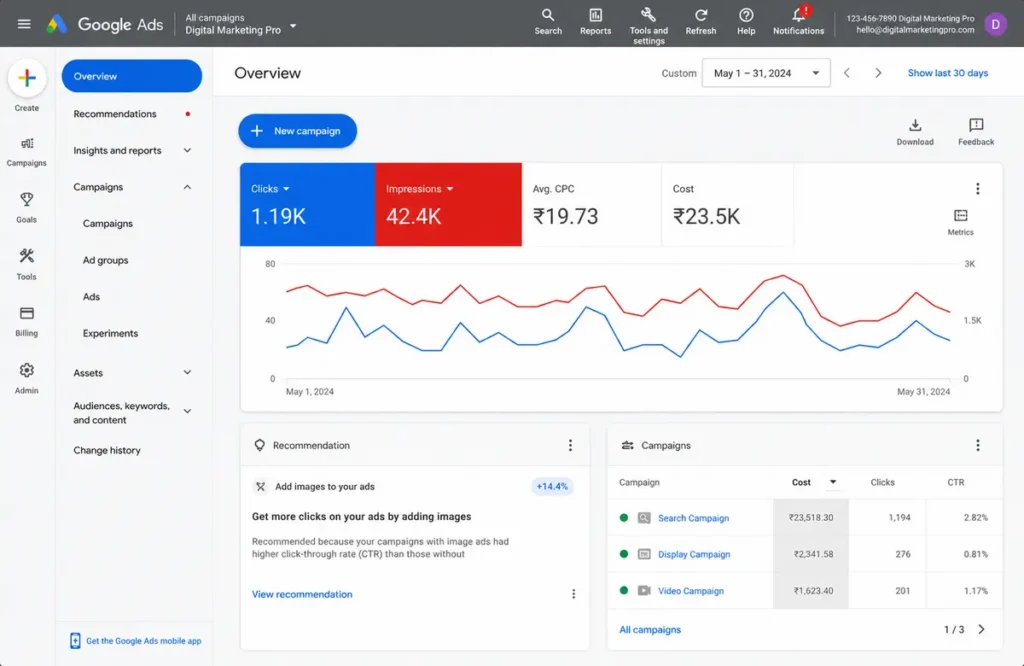
Quality Score is the lever almost nobody pulls hard enough. Google rates ad relevance, expected click-through rate, and landing page experience; a strong score cuts cost while lifting your spot. Moving from a 5 to an 8 trims CPC by roughly 30%, and the gap between top and bottom accounts has widened to nearly 4x. Google calls it a diagnostic; it is really a discount waiting to be earned.
Why Google Ads Is More Effective Than Other Advertising Channels
Difference Between Intent and Interruption Marketing
The split is intent versus interruption. A search ad answers a question someone just asked; a feed ad interrupts someone watching dog videos and tries to manufacture a want. One captures demand, the other creates it, and capturing is cheaper and faster. Google carries roughly 3.5x the purchase intent of social for this reason. It helps to understand how Google and Facebook ads fit together, since their jobs differ by design.
Faster Conversion Cycle Advantage
Search users are already near the finish line. No weeks of nurturing at the top of a funnel — they want a fix today, which collapses the distance between first click and closed sale. For a business watching cash flow, that is the difference between paying for ads this month and getting paid this month.
Better Control Over Campaign Performance
Few channels hand you this many dials. You set the budget, pick who sees the ad, and shift targeting or bids the same afternoon you spot a problem. Something underperforms, you see it and change it — pouring money toward what works and starving what does not, almost in real time.
Cross-Industry Applicability
The model bends to fit almost any business — a plumber for emergency calls, a store for sales, a SaaS company for trials, a clinic for patients. Few channels stretch across services, ecommerce, B2B, and local without losing their edge. Whatever you sell, some version of paid search is built to move it.
Strategic Advantages of Google Ads in Business Advertising
High-Intent Lead Generation Capability
Its best trick is reaching people ready to buy. Target commercial searches — “hire,” “buy,” “near me,” “quote” — and your budget concentrates on the committed, not the curious. This is online lead generation at its most efficient. The leads cost more per click in some industries, but they close, which makes them cheap.
Geographic Precision Targeting
You decide exactly where the ad runs, down to a few miles. A neighborhood business fences spend to one service area; a national brand lights up whole regions. Either way, you stop paying to reach people you could never serve. Every impression has a real shot at becoming a customer.
Budget Flexibility and Scaling Control
There is no gate to clear. Start with a few hundred dollars, watch what converts, then feed the winners and cut the rest. Once the data names your profitable campaigns, scaling becomes arithmetic instead of a leap of faith — how disciplined businesses grow without betting the quarter on a guess.
Rapid Market Testing Advantage
Paid search doubles as a cheap, fast laboratory. Curious whether a new offer lands or which headline pulls? Run it, and real buyers answer within days — actual people spending actual money, not a survey. That lets you kill a weak idea for a hundred dollars instead of after a full launch.
Types of Google Ads Campaigns That Drive Business Advertising Results
Search Campaigns for High Intent Traffic
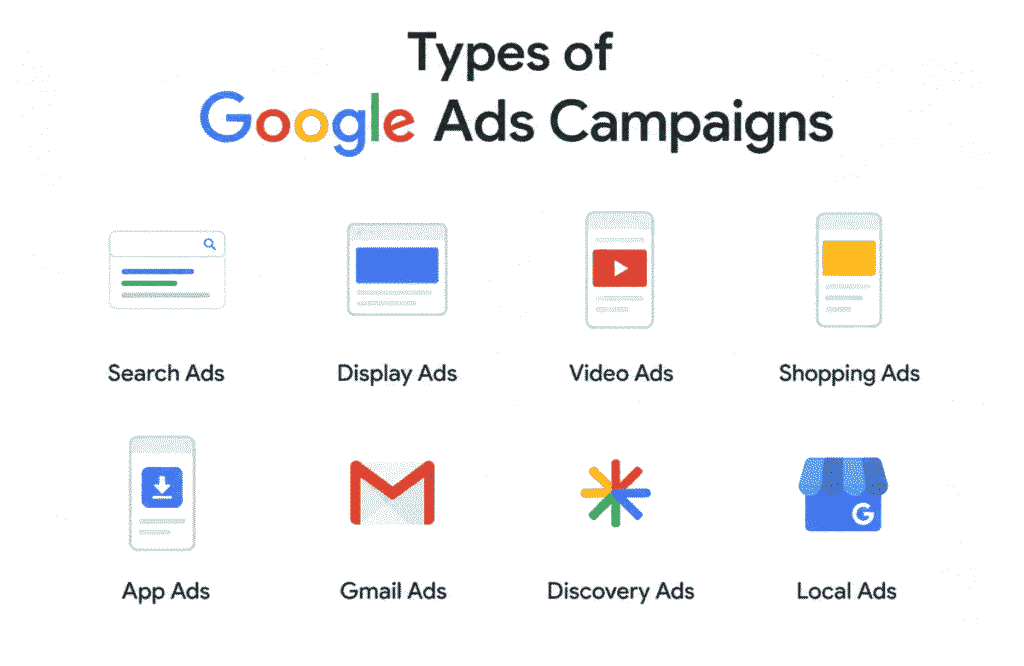
Search campaigns are the engine room. Text ads land in front of people actively typing your keywords — the highest-intent traffic anywhere in advertising. For most businesses chasing leads or sales, this is where the bulk of the budget belongs.
Display Campaigns for Awareness Expansion
Display trades intent for reach. Visual ads ride across millions of sites at a CPC near $0.63 — a fraction of search — building familiarity as people browse. Conversion rates run low, so it earns its keep on awareness and remarketing, not direct sales.
Video Campaigns for Engagement Building
Video lives on YouTube, Google’s second-biggest ad earner, and works through story. Show the product running, walk a before-and-after, build trust text cannot. For any business with something worth demonstrating, video adds a dimension the other formats lack.
Shopping Campaigns for Product-Based Businesses
Shopping is built for ecommerce. The ad shows your product, price, and photo in the results, so a shopper sizes you up before clicking. That pre-qualifies the visit — people who tap already like what they see and the price — which is why product businesses lean on it.
Performance Max Campaigns for Automation Scaling
Performance Max hands Google’s AI the keys to spread one campaign across Search, Display, YouTube, Gmail, and Maps. Google describes it as a goal-based type that reaches all inventory at once, and 72% of advertisers now run at least one. It scales fast, but runs hot while learning and needs clean data plus a human minding the inputs, or it spends confidently in the wrong rooms.
Building a High-Performance Google Ads Strategy for Business Advertising
Identifying Commercial Intent Keywords
It begins with the right words — not every term that name-drops your industry, but the ones a ready buyer types. “Emergency plumber,” “buy standing desk,” “injury lawyer near me.” Those commercial searches are where the money hides. Fill campaigns with broad informational terms and you pay to educate people who never meant to buy.
Structuring Campaigns Based on Funnel Stages
Good accounts keep funnel stages apart. Awareness, consideration, and conversion each want their own message and budget; blending them turns your data to mush. Separate them and you see what each stage contributes, then fund it on evidence, not instinct.
Writing Ads That Match Search Intent
The ad has to echo the search. Someone hunting “24-hour locksmith” should not hit a generic home-security ad — the mismatch costs the click and the trust at once. Line up the search, the ad, and the promise, and click-through rate climbs while cost drops. Match is one of the cheapest wins available.
Landing Page Optimization for Conversions
The click buys a visit, nothing more. If the page loads slowly or drifts off the ad’s promise, the visitor is gone — and in 2026 that is the most common failure, high CTR and low conversion, a page problem in an ad problem’s clothes. Match the message, speed it up, point to one action. This is where conversion optimization happens.
Conversion Tracking Setup and Importance
None of it counts without measurement. Conversion tracking shows which keywords, ads, and campaigns produce real outcomes — the calls, forms, and sales that pay you. Wired up, every decision sharpens; without it, you guess in an expensive dark room. The least glamorous step in any account and easily the most important.
Common Mistakes That Reduce Google Ads Performance
Targeting Broad Keywords Without Intent
The classic mistake is bidding on broad terms with no buying signal. They pull a flood of traffic and a trickle of conversions, draining budget on curiosity clicks. Tighten toward specific, intent-heavy phrases and traffic drops while results climb. A few hundred right visitors beat ten thousand wrong ones.
Ignoring Negative Keyword Filtering
Skipping negative keywords is a slow leak nobody notices until the budget is gone. Without them your ads surface for “free,” “jobs,” “DIY,” and a hundred dead ends. A solid negative list blocks that waste before it costs a cent. Tedious work, real savings, every day.
Weak Landing Page Experience
Send paid traffic to a weak page and you paid for a click you throw away. Slow loads, clutter, a vague offer, a long form — each shoves visitors back to the results. Bounce spikes, Google notices, and your costs climb to punish it. The page deserves as much attention as the ad.
Lack of Continuous Optimization
Google Ads punishes set-and-forget. Competitors shift, trends move, and a campaign that printed money last quarter can rot. With CPCs rising, the margin for lazy management is razor-thin. Accounts pruned and tested weekly hold their ground; the ones left alone slide. The work never ends, by design.
How Small Businesses Can Compete Using Google Ads
Leveraging Long-Tail Keywords
Long-tail keywords are the small-budget edge. These longer, specific searches draw less competition, cost less, and carry more intent. A plumber bidding “burst pipe repair Pearland” fights a fraction of the auction “plumber” attracts, and reaches someone with a real emergency. Specific is cheaper and converts better.
Local Search Targeting Strategy
For local businesses, geography is the advantage. Fence spend to a tight radius and you compete only where you can win, against a thinner field. Strong local search targeting lets a corner shop own its few square miles without brawling with national brands.
Budget Efficiency Techniques
When money is tight, efficiency does the heavy lifting. A clean keyword list, firm negatives, focused targeting, and a clear path to conversion stretch a modest budget past a bloated one. Add spend only where the data shows a return, and a small account stays profitable as it grows.
Competing Through Relevance, Not Budget
This is the part big spenders forget. Because Ad Rank rewards quality, a small advertiser with a sharper ad and faster page can outrank a giant running careless campaigns. You do not have to win the spending war — you have to be more relevant, and relevance is free to anyone willing to do the work.

Real-World Applications of Business Advertising with Google Ads
Service-Based Businesses
For contractors, lawyers, clinics, and consultants, Google Ads is a lead machine. A high-intent search becomes a call or form fill from someone who needs the service now. When one client is worth a few thousand dollars, even a steep cost per lead pays for itself many times over. The intent match here is about as clean as advertising gets.
E-Commerce Businesses
Online stores ride Search and Shopping to put products in front of ready buyers. Shopping ads show the item, price, and image in the results, pulling pre-qualified clicks toward checkout. E-commerce ROAS averages around 4:1, with sharp operators hitting 8:1 — one of the shortest paths from search to sale.
Local Businesses
Local shops use paid search to ring the phone and fill the room. Someone searching “coffee near me” or “same-day locksmith” is ready to move in minutes, and a well-placed local ad grabs that moment. The gap between click and customer can be a single short drive.
SaaS and Digital Products
Software companies use search to capture signups and trials. Target the problems the product solves and you reach people already hunting for a fix. The scalable model fits subscriptions, where lifetime value justifies steady spend.
B2B Advertising Systems
B2B uses Google Ads to reach decision-makers researching solutions, with longer cycles and bigger deals. A qualified lead caught at the research stage can seed a contract worth far more than the click that started it. Precision is everything.
Measuring Success in Google Ads Campaigns
Conversion Rate as Primary Metric
Conversion rate is the headline — the share of clicks that become a lead, sale, or signup. A healthy rate means targeting, ad, and page are rowing together; a weak one flags a break in the chain, usually the page in 2026.
Cost Per Acquisition Efficiency
Cost per acquisition tells you what each customer costs to win. With the median up around 12% year over year, this separates growth from quiet bleeding. A busy-looking campaign still loses money if acquisition outruns the sale’s value. Keep CPA under your customer’s worth and you are in business.
Return on Ad Spend Evaluation
ROAS measures revenue against what you spent — the cleanest read on whether the channel pays. Google’s research pegs the average near $8 for every $1 spent, though it slipped about 10% last year as costs climbed. Above break-even, the channel funds growth, and it keeps your eyes on profit, not vanity counts like impressions.
Traffic Quality vs Quantity Analysis
Finally, judge traffic by quality, never volume. Ten thousand clicks that bounce are worth less than five hundred that convert. Look past the count to intent and you learn whether you are buying prospects or expensive noise. Quantity flatters a dashboard; quality grows a company.
Future of Business Advertising with Google Ads and AI Systems
Rise of AI-Driven Bidding Systems
Automated bidding went from optional to unavoidable. AI now sets bids in real time across most accounts, reading signals faster than any human. The machine handles the per-auction calls while you set the destination, and advertisers feeding it good data report lower costs per conversion. The catch is clean inputs — garbage in, confident garbage out.
Predictive Targeting Improvements
Targeting is turning predictive. Beyond reacting to searches, Google’s systems increasingly forecast who is likely to convert from behavior. Ads reach the right people with less manual guesswork. The algorithm is getting good at finding buyers before they fully raise a hand.
Automation in Campaign Optimization
Routine upkeep is automating too. Bid tweaks, budget shifts, asset tests — more runs on its own each quarter. That frees marketers from the grind to spend time on strategy, where humans still beat machines.
Human Strategy Still Required
But automation is a tool, not a brain. AI optimizes toward the goal you set with the data you supply — it cannot decide what your business should chase, shape your offer, or smell when the numbers are lying. Judgment stays human. That mix of machine speed and human oversight is why many businesses hire a Google Ads expert rather than trust the algorithm alone, and why agencies reselling paid search lean on white label Google Ads management.
Final Insight — Why Google Ads Dominates Business Advertising
Core Reasons for Dominance
Google Ads dominates for three reasons: intent, scalability, and control. It reaches people the instant they want what you sell, scales from a few hundred local dollars to a national push without cracking, and hands you the controls to steer every dollar. No other channel stacks all three, which is why paid search keeps winning budget while other formats fight over scraps.
Execution Over Platform Importance
Still, the platform is only as good as the hand on it. Two businesses run identical tools and land opposite results, because strategy and execution decide the outcome more than the software. The winners target sharply, write relevantly, track honestly, and optimize without stopping. Tools do not create success — execution does, and pairing paid search with organic compounds it further.

Ready to Grow With Smarter Business Advertising?
Google Ads rewards the businesses that target with intent, track honestly, and never stop optimizing. Nail those and paid search becomes one of the most dependable growth engines you can run. If you would rather have specialists handle the strategy, structure, and daily tuning, book a free consultation with the Ecommerce Planners contact page and put your budget to work.
Google’s own help documentation states that Ad Rank is calculated using bid amount, ads quality, Ads Rank thresholds, the context of the search, and the expected impact of ad assets — meaning a highly relevant ad can win a better position at a lower price than a competitor with a higher bid.
Source: Google
Frequently Asked Questions
What is business advertising in Google Ads?
Business advertising in Google Ads means promoting your products or services through paid placements that appear when people search relevant terms or browse Google’s network. You bid to show your ad to a targeted audience and pay mainly when someone clicks. The goal is reaching people with real intent and turning that attention into leads or sales.
Is Google Ads good for small businesses?
Yes, often more than for big ones. The system rewards relevance over raw spend, so long-tail keywords, tight local targeting, and a sharp offer let a small budget punch above its weight. The trick is concentrating spend on high-intent searches instead of trying to reach everyone at once.
How fast can results be seen?
Faster than most channels. Search ads can pull clicks and leads within days of launch, since they reach people already looking to buy. The first couple of weeks usually go to fixing tracking and gathering data, then the strong, efficient results build over the following months as the account is tuned.
What budget is required to start?
There is no fixed minimum, which is half the appeal. Plenty of small businesses begin with a few hundred to a couple thousand dollars a month on one tight campaign. What matters more than the figure is spending it on the right, high-intent keywords. A small budget aimed well beats a large one spread thin.
Why do Google Ads campaigns fail?
Almost always for fixable reasons: broad keywords with no intent, missing negatives, a weak landing page, broken tracking, or no ongoing optimization. The failures trace back to setup and management, not the platform itself. Repair those fundamentals and performance usually turns around.
Which campaign type works best for beginners?
Search campaigns. They target people actively searching for what you offer, which makes them the most direct to run and the easiest to measure. Once a search campaign turns profitable and produces clean data, you can branch into Shopping, Display, or Performance Max from a position of strength.

