Every business running paid advertising hits this question eventually. Two platforms. Two completely different approaches to reaching buyers. Pick the wrong one and you burn budget without results. Pick the right one and your pipeline fills consistently. At Ecommerce Planners, we provide the best Google Ads services and Facebook Ads services, helping businesses make the Google Ads vs. Facebook Ads decision based on actual business goals — not guesswork or generic advice.
We’ve been conducting campaigns for service businesses, e-commerce brands, contractors, law firms, etc on both platforms since 2019. This guide covers the full scope of the environment, how each platform functions, what each performs best at, how much they cost, and which one needs to be in your strategy now.
The One Difference That Changes Everything
Most Comparisons of Google Ads vs Facebook Ads Dive too deep into the ad formats and audience sizes. Sure, that’s important- but it’s not the one thing that fundamentally differentiates both platforms.
Google Ads Catches People Mid-Decision
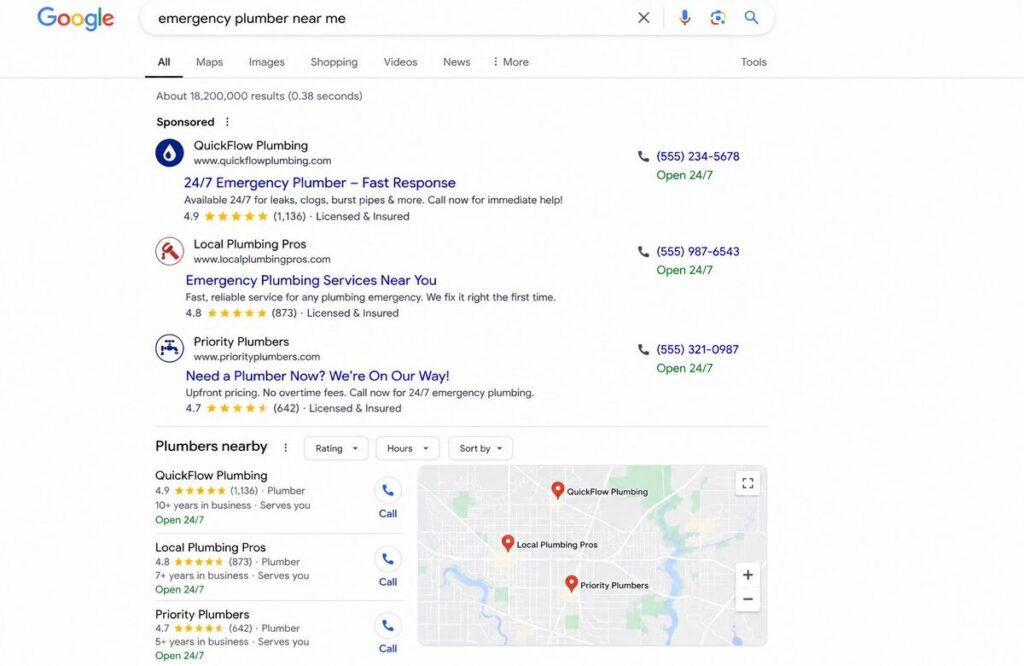
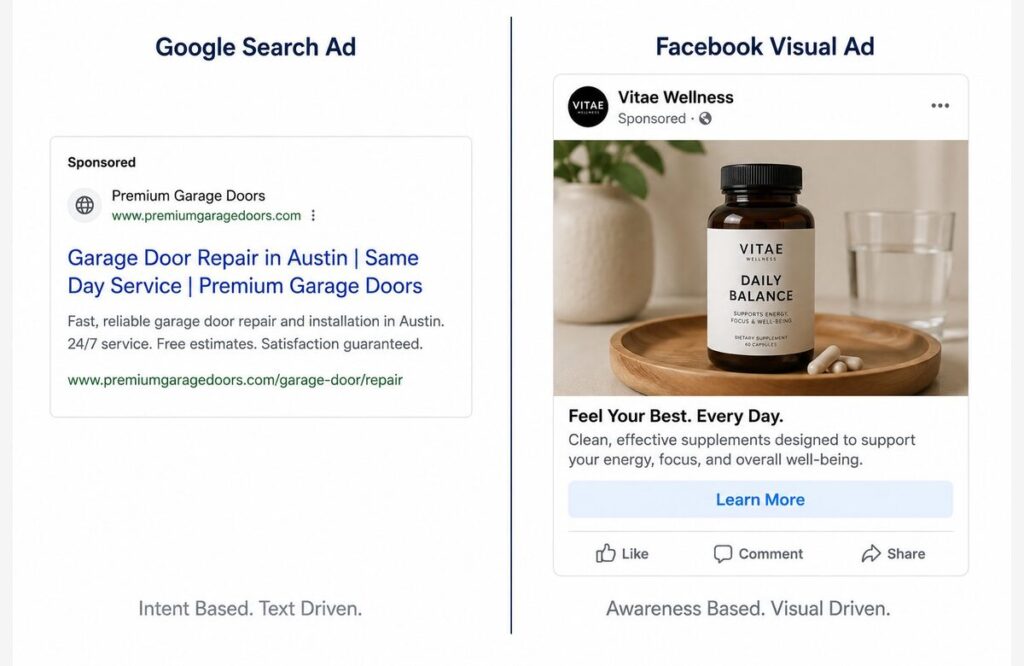
Search advertising works because the buyer already knows what they want. They typed it into Google. The intent is explicit. Your ad just has to show up and give them a reason to click.
This is why a roofing company running Google Ads for roofing contractors gets calls the same day a campaign launches. Someone searched “roof repair near me” after spotting a leak. The demand existed before the ad did. Google simply connected the two.
The conversion path on Google is short. Search — click — call — booked. That directness is what makes paid search so powerful for high-intent categories.
Facebook Ads Plants the Idea First
Facebook operates in a completely different context. Nobody opens Facebook to find a contractor or hire a lawyer. They are scrolling through content — catching up with friends, watching videos, consuming entertainment.
Facebook Ads interrupt that experience intentionally. A well-placed ad introduces someone to a product or service they were not actively looking for but might genuinely want. That is demand creation rather than demand capture.
A fitness brand, an online course, a home decor product — these are things people discover rather than search for. Facebook puts them in front of audiences built on demographics, interests, and behavioral signals rather than live search intent.
The conversion path on Facebook is longer. See ad — get curious — visit website — consider — eventually convert. That longer journey is not a weakness. It is just a different kind of marketing that suits different kinds of businesses.
When Google Ads Is the Right Call
Businesses Built on Urgent Search Behavior
Any business where customers search Google when they need something immediately is a natural fit for paid search. The intent is already there. The ad just has to be visible and compelling.
Home service businesses see this most clearly. Our work on Google Ads for auto repair shops and Google Ads services for plumbers consistently shows that search campaigns outperform social advertising in those categories because the trigger is a problem that needs solving today — not tomorrow.
Legal and financial services follow the same pattern. Someone searching “DUI attorney near me” or “financial advisor for retirement planning” is actively looking for help. Our campaigns for Google Ads for law firms and Google Ads for financial advisors are built entirely around capturing that moment of high intent before a competitor does.
Specialty contractors fall into this category too. Google Ads for epoxy flooring campaigns work because someone searching for a flooring installer has already decided they want the work done. The search is the signal.
When You Need Leads Fast
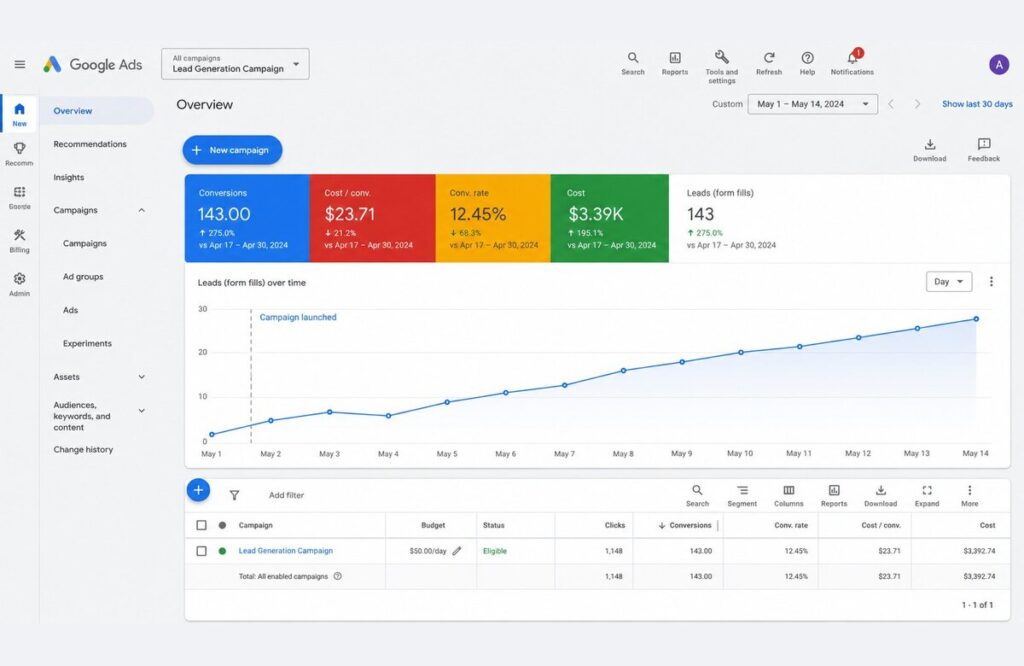
Google Ads produces leads faster than nearly any other paid channel. A properly structured campaign can generate phone calls within 24 to 48 hours of going live. For businesses with an immediate pipeline need — a new service area, a slow quarter, a seasonal push — nothing matches that speed.
This speed advantage is especially significant for local service businesses. A well-built Google Ads for contractors campaign targeting a defined radius can produce booked jobs in the first week. The intent is immediate. The conversion window is short.
When Facebook Ads Make More Sense
Products That Need to Be Seen to Be Wanted
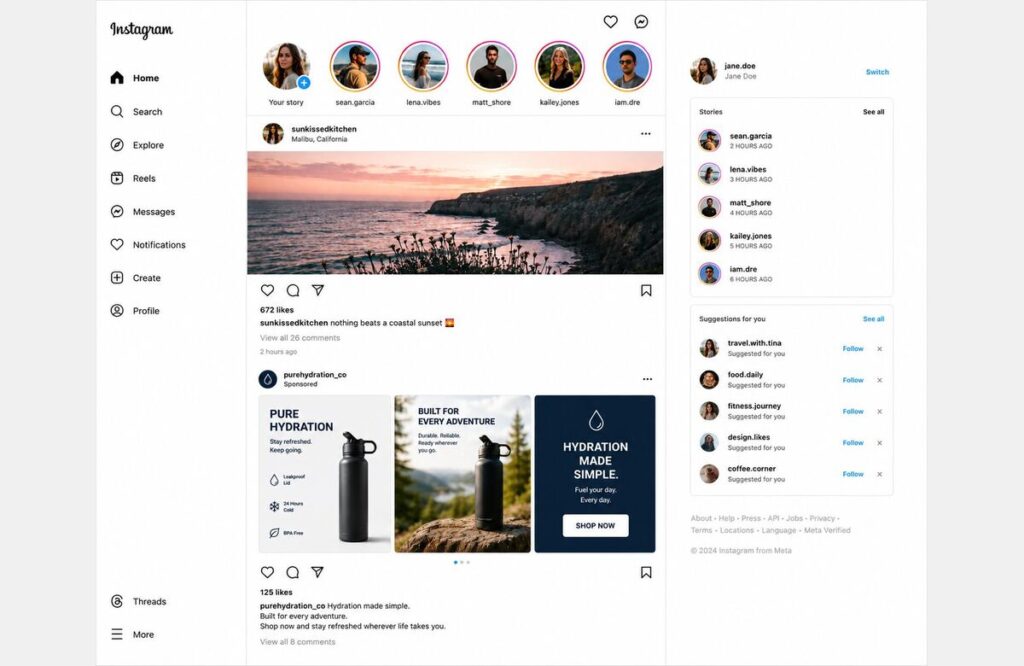
By design, Facebook and Instagram are visual platforms. Products that benefit from seeing , home renovations, fashion, food, beauty, fitness , perform exceptionally well here because the visual cue sparks desire that wasn’t there before the ad appeared.
A homeowner who was not thinking about their garage floor, sees a breathtaking before-and-after epoxy makeover on Instagram and instantly wants it.That discovery moment is something search advertising cannot replicate because the person was never going to type “epoxy garage floor” into Google unprompted.
For visually driven products and services, Facebook creates the demand that Google later captures when that same person eventually searches.
Building an Audience From Scratch
A startup launching a new product faces a specific challenge — there is no existing search demand to capture. Nobody searches for something they do not know exists yet.
Facebook solves this. Audience targeting based on demographics, interests, and behaviors lets a new brand reach exactly the right people before any search volume has formed around their product. This is where SEO for startups and Facebook Ads work well together — Facebook builds early awareness while SEO builds long-term organic visibility simultaneously.
For e-commerce brands specifically, Facebook remarketing is one of the highest ROI uses of paid social. Someone who visited a product page but did not buy gets shown that product again across Facebook and Instagram. Combined with Google Ads for e-commerce shopping campaigns, the two platforms cover the full purchase journey from discovery to conversion.
Breaking Down the Costs Honestly
CPC CPM and What They Actually Mean
The Google Ads vs Facebook Ads cost conversation gets oversimplified constantly. Facebook has a lower average CPC — around $1.72 across industries according to WordStream’s 2024 data. Google averages around $4.22 per click across all categories.
But CPC alone is a meaningless metric without conversion data behind it. A $1.72 Facebook click that never converts costs more than a $4.22 Google click that books a $3,000 job.
CPM , cost per thousand impressions , is a more useful metric for awareness campaigns. Facebook averages at $11 CPM and Google Display is $3 to $10 depending on targeting and placement. For pure reach, Facebook delivers volume at competitive rates.
Where Real ROI Comes From
Real ROI in the Google Ads vs Facebook Ads debate is always a function of two things — how well the campaign is built and how naturally the platform matches the business type.
For service businesses with urgent demand, Google consistently wins on ROI because the conversion path is shorter and intent is higher. A roofing company, a law firm, an auto repair shop — these businesses convert search traffic at rates that social advertising rarely approaches in the same categories.
For e-commerce and brand-driven businesses, the ROI picture shifts. Google Shopping handles active product searches efficiently. Facebook handles discovery, awareness, and the retargeting layer that brings back visitors who did not convert initially. Neither platform alone covers the full customer journey as effectively as both working together.
For businesses investing in long-term organic growth alongside paid — whether through SEO for new website strategies or SEO for landscapers programs — paid advertising fills the pipeline while organic builds in the background.
Industry by Industry — Which Platform Fits
This is the practical question most businesses actually need answered. Here is a straightforward breakdown based on real campaign experience:
- Local service businesses like plumbers, roofers, contractors, and auto repair shops should be on Google first, urgent intent drives their leads, and Facebook can support seasonal promotions as an awareness channel
- Legal and financial services convert best on Google where high-intent searches signal readiness to engage — Facebook builds brand credibility through content but rarely drives direct conversions in these categories
- E-commerce brands benefit from Google Shopping for active buyers and Facebook for discovery and retargeting — running both creates a full-funnel paid strategy that covers every stage of the purchase journey
- New product launches and startups need Facebook first to build awareness before search demand exists — Google becomes more valuable once branded searches start appearing
- Specialty contractors and trades like epoxy flooring and landscaping benefit from Google for immediate job inquiries and Facebook for portfolio-driven visual storytelling that creates future demand
Running Both Platforms Together
Google Ads vs Facebook Ads is framed as a choice. For many businesses it should not be.
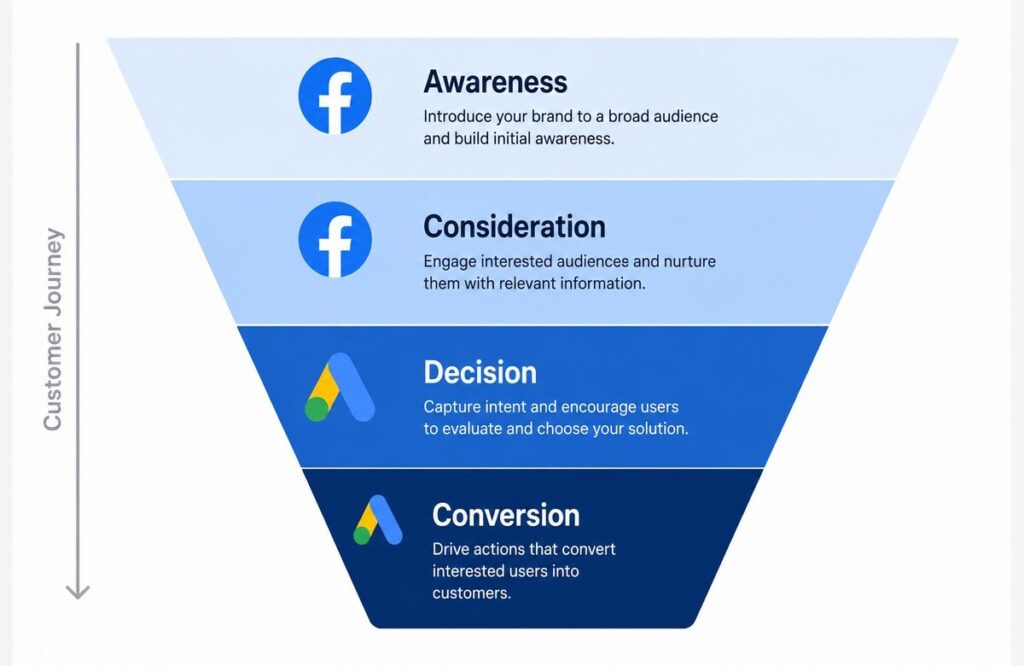
The two platforms serve different stages of the customer journey. Google captures buyers who are ready now. Facebook reaches people who might be ready later. Running both means your business is visible at every stage — not just the final one.
A regional service business like those covered in our Google ads agency in Florida work might run Google search campaigns to capture immediate local demand while using Facebook to build brand familiarity among homeowners in their service area over time.
The practical approach is to allocate budget based on where the highest ROI activity is happening first. For most service businesses that means Google gets the majority of paid budget early. Facebook plays a supporting role — brand awareness, retargeting, seasonal promotions — rather than carrying primary lead generation responsibility.
As the business grows and conversion data accumulates, the balance can shift. More budget moves to wherever the data shows the strongest return. That is how mature paid media strategies are managed — not by picking a platform once and committing forever but by letting performance data guide allocation continuously.
The Three Mistakes That Kill Campaigns on Either Platform
Mistake one — judging too early. Facebook campaigns need two to four weeks before the algorithm optimizes delivery. Google campaigns need enough conversion data — typically fifty conversions minimum — before smart bidding works effectively. Pulling campaigns after ten days because results look weak is one of the most common and costly mistakes in paid advertising.
Mistake two — no conversion tracking. Running campaigns without verified conversion tracking means optimizing toward clicks and impressions instead of actual leads and sales. Every campaign we build starts with conversion tracking confirmed before a single dollar goes live. Without it the data is meaningless and budget optimization is impossible.
Mistake three — treating both platforms identically. The creative, copy, and targeting that works on Google does not work on Facebook. Search ads are text-based and intent-matched. Social ads are visual and interruption-based. A business running the same message on both platforms with no adaptation is leaving significant performance on the table.
Final Thought
The Google Ads vs Facebook Ads question does not have one right answer. It has the right framework. Where is your customer when they are ready to make a decision — and which platform puts your business in front of them at that exact moment? Service businesses with urgent demand belong on Google. Visual brands building new audiences belong on Facebook. Most established businesses belong to both working together across the full customer journey. Ecommerce Planners has been making these decisions for real businesses since 2019. The answer always comes back to strategy first and platform second. Get that order right and results follow naturally.
Get Your Free Paid Ads Strategy Session — Find out which platform fits your business and exactly how to build campaigns that deliver real ROI.
In 2025, global advertising revenue surpassed $1.14 trillion — with digital advertising accounting for approximately 75% of all ad spend worldwide. Google and Meta together command over 50% of the entire global digital advertising market, making them not two options among many but the two dominant pillars that every serious paid media strategy is built around. Amazon has now emerged as a third major player, but Google and Facebook remain the platforms no growth-focused business can afford to ignore.
Source: Swydo
FAQs
Q1. Is Google Ads better than Facebook Ads?
Neither is universally better — the right answer depends on your business type, your audience, and where your customers are in their buying journey. Google wins for high-intent service businesses where people search when they need help. Facebook wins for visual products, brand awareness, and audiences that need to be introduced to something new before they will search for it.
Q2. Which is cheaper — Google Ads or Facebook Ads?
Facebook has a lower average CPC of around $1.72 versus Google’s $4.22 but cost per click is not the right metric. Cost per lead and cost per sale are what matter. A cheaper click that never converts is more expensive than a pricier click that books a job. True cost comparison requires conversion tracking on both platforms.
Q3. Should I use Google Ads or Facebook Ads for my small business?
For most small local service businesses Google Ads should come first. The intent-driven nature of search matches how people find and hire local service providers. Facebook adds value as a brand awareness and retargeting channel once the primary lead generation campaign is working on Google.
Q4. Can I run Google Ads and Facebook Ads at the same time?
Yes and for many businesses running both is the smartest approach. Google captures active demand while Facebook builds awareness and handles retargeting. The key is allocating budget based on where each platform performs best for your specific business rather than splitting it equally between them

